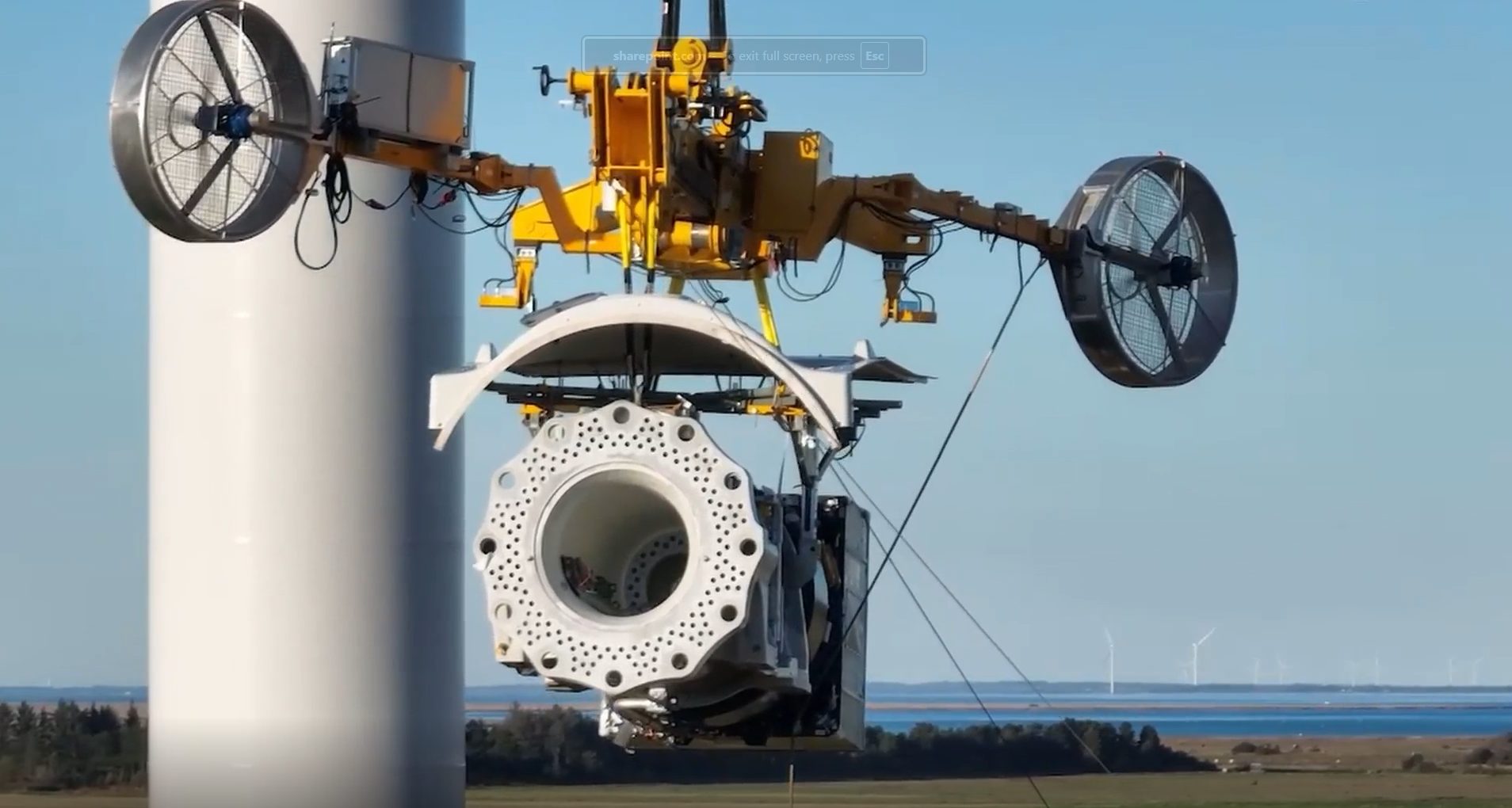

SeaSight Solutions has developed a breakthrough in load control in the wind energy industry. Their flagship product, the APS, replaces manual taglines with advanced thruster technology, delivering safer, more efficient turbine lifting and installation.
In the world of wind turbine installation, precision and safety are everything.
For decades, massive components like blades and nacelles were guided into place using taglines. That meant, long ropes held by teams of workers on the ground, fighting wind and gravity to keep control.
It often took up to 20 people, all perfectly synchronized, just to stabilize a single load.
SeaSight Solutions, a Danish engineering company with more than 70 years of experience, saw an opportunity to rethink this process entirely. Known for designing and manufacturing advanced lifting and handling equipment, the company has a long tradition of solving demanding industrial challenges.
But their biggest breakthrough came six years ago, when a major wind turbine manufacturer approached them with a prototype and a question:
Could you turn this idea into a fully functional product?
A new approach to load control
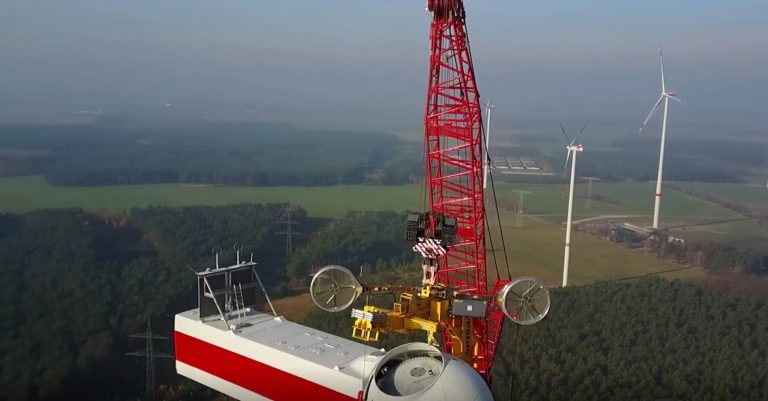
APS replaces traditional taglines with precision-controlled thrusters that allow one operator to stabilize heavy turbine components instantly, even when wind conditions change. This shift dramatically improves safety, widens the weather window for lifts, and reduces the size of ground crews needed on-site. Lasse explains:
“The APS can stabilize a load immediately when the wind shifts. Compared to taglines, where up to 20 people need to work in sync, one person can control the APS”
This not only improves safety but also reduces the need for large hardstand areas around the turbine, which is a major operational advantage.
Engineering APS with SOLIDWORKS
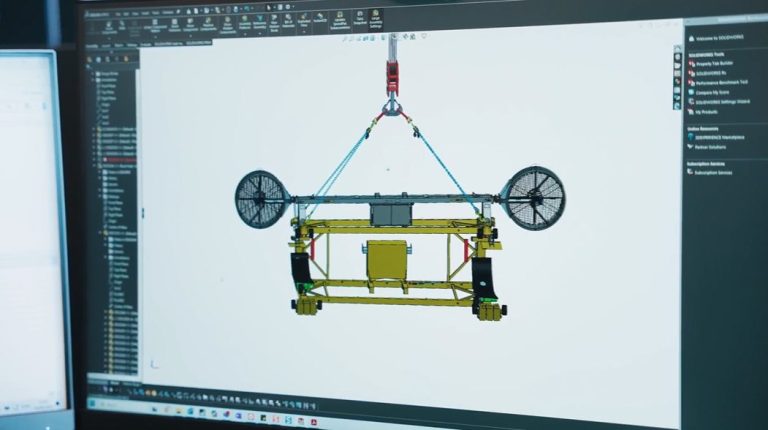
The entire APS was developed in SOLIDWORKS, allowing SeaSight Solutions to test assemblies, movements, and interactions before anything was manufactured.
“Our very first APS system worked from day one,” Lasse says. “That’s because we modeled everything in 3D first — catching 99% of potential issues before they ever reached production.”
By building the entire system in 3D, the team could simulate complex movements, check for interferences, and test the stroke lengths in the pitch system long before anything was manufactured. This approach cut down the number of prototypes they needed and saved both time and cost in development.
SeaSight Solutions also works closely with turbine manufacturers, who often share 3D models of their components. That makes it possible to check early on how the APS will interact with blades, nacelles, and lifting equipment and ensures that everything fits and functions together before it ever reaches the site.
Controlling the workflow with SOLIDWORKS PDM
Managing engineering data becomes increasingly complex when every project involves hundreds of parts, custom assemblies, and constant design updates. For SeaSight Solutions, keeping drawings, revisions, and production files organized is just as important as the engineering work itself.
That’s where SOLIDWORKS PDM plays a crucial role. It ensures that every file is stored correctly, every version is tracked, and every engineer is working from the latest design. It’s a major benefit when developing systems as precise as APS.
Lasse explains it simply:
“With PDM, we can focus on designing. Data cards, PDFs, all the file handling – it’s done automatically. It gives us real peace of mind knowing our drawings and documents are always structured and under control.”
SOLIDWORKS PDM also streamlines their production workflow. Information added at the start of a project flows with ease into later stages, meaning engineers don’t have to re-enter details when creating 2D drawings or manufacturing PDFs. Even processes that still require printed documents are handled automatically through PDM, ensuring consistency from design to workshop.

A partnership built on technical reliability
As the company continues to scale its engineering work, having a dependable digital environment has become just as important as the products they create.
To support that growth, they entered into an Innovation Agreement with PLM Group. It’s a collaboration designed to keep their systems stable and efficient,
Through the agreement, Seasight Solutions has direct access to a dedicated PLM specialist who knows their setup, understands their workflows, and can step in whenever technical challenges arise. Instead of troubleshooting systems or worrying about software maintenance, the engineering team can focus entirely on designing tools like APS.
Lasse explains:
“It’s been a really positive experience. Knowing we have PLM Group to manage our systems means we can focus on building solutions like APS. And when challenges do show up, it’s good knowing there’s someone we can call who understands our setup.”
A system designed for the full lifecycle of wind turbines
The APS has become a defining tool in modern wind turbine work, not just during installation, but throughout the entire lifespan of a turbine.
Its value goes beyond new builds. As operators begin decommissioning older turbines, both onshore and offshore, the need for the same stability, control, and precision becomes just as important. And in practice, APS is proving to be just as effective in taking turbines down as it is in lifting them into place.
With a stable digital foundation supported by PLM Group, Seasight Solutions can keep refining the system and respond to the evolving needs of the wind industry. From the first CAD model to the final lift on-site, their work reflects a simple mindset that has guided the company for decades: if something makes sense, they’ll find a way to make it real.


